
There are over 3,000 schools of Ikebana. The three best-known schools are Ikenobo, Sogetsu, and Ohara. Ikenobo is the oldest and largest school and is based on classical concepts. Sogetsu is a modern school and most represented in the West and emphasizes self-expression.
At I.I. Chapter No.1, we ensure that our teachers hold the necessary documents in the ikebana school they are teaching. We maintain a complete list of our qualified teachers who can provide your lessons or demonstrations. Seven Schools are represented in our Chapter. To find out more about each school’s main approach or to contact teachers in the school, select the school name below.
If you fill in the contact form and submit it, emails will be sent to all Chapter teachers for that school, allowing them to see your request and contact you if there is a match of interests. Be as specific as you can about your interests and why you wish to contact them. More information about the Schools can be found on each School’s website, also linked below. If you are a member of I.I. Chapter No. 1, you may go to the FOR MEMBERS tab to see detailed contact information for all the Chapter teachers.
For Information about related Asian Arts, Follow this link.

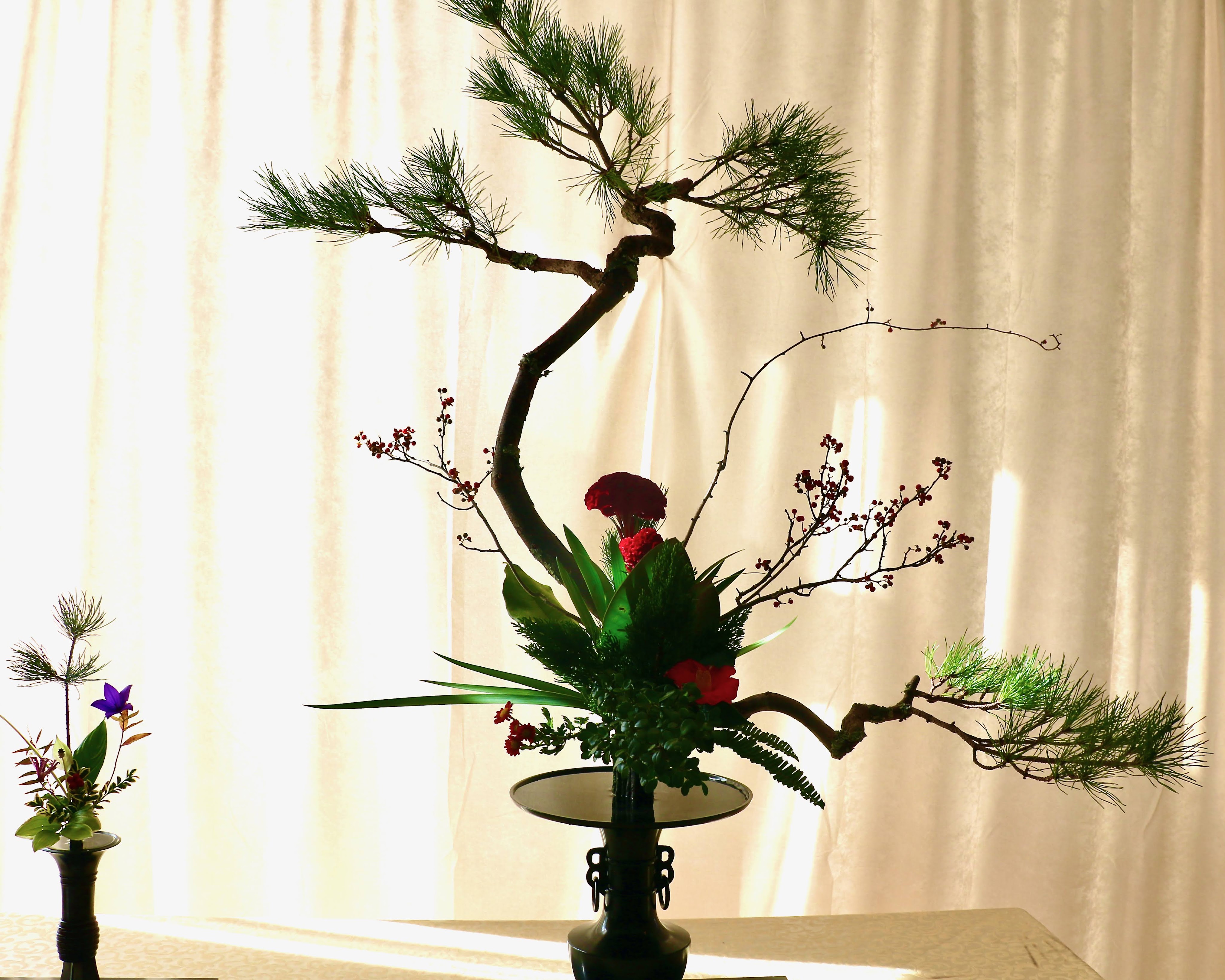
IKENOBO PHILOSOPHY AND BRIEF HISTORY
The beauty of a natural landscape (rikka style) and the essential character of a plant’s natural environment (shoka style) are just two of the themes of this classical school. This School was founded by a Buddhist priest in the mid-15th century. The philosophy of Ikenobo teaches us that “Not only beautiful flowers but also buds and withered flowers have life, and each has its own beauty. By arranging flowers with reverence, one refines oneself.”

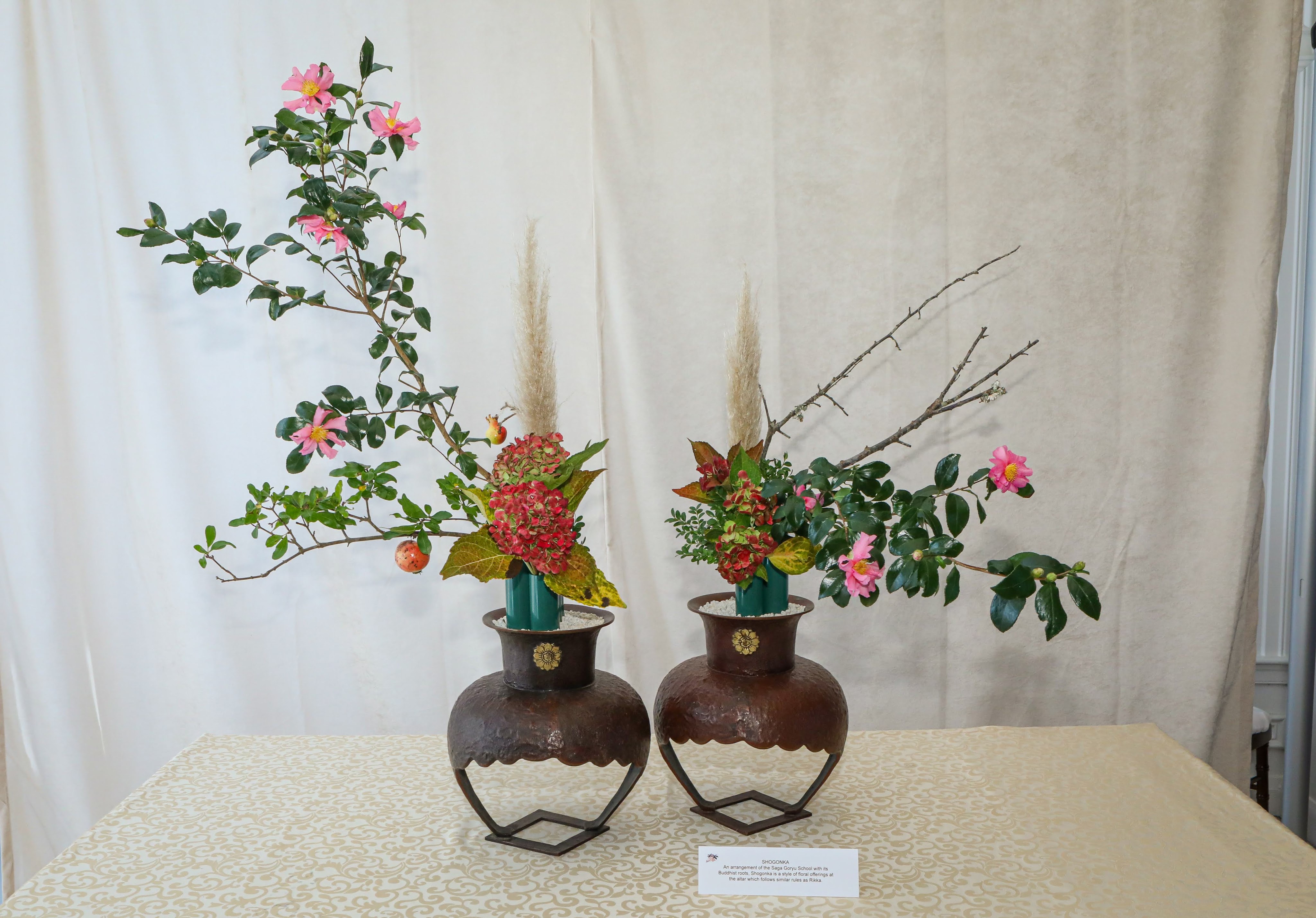
SAGA GORYU PHILOSOPHY AND BRIEF HISTORY
The Saga Goryū school traces its origins twelve hundred years to the Emperor Saga’s arrangement of three chrysanthemums at his summer palace on Osawa Pond in Kyōto. The palace became the Shingon Buddhist temple of Daikakuji, where successive emperors would retire to practice the traditional Japanese arts of self-cultivation, especially the art of flower arrangement. The temple today is the headquarters of the Saga Goryū school and, by license, displays the sixteen-petal imperial chrysanthemum as its emblem. The goals of the school include revitalizing classical forms and awakening the arranger and viewer to the spiritual aspects of nature.

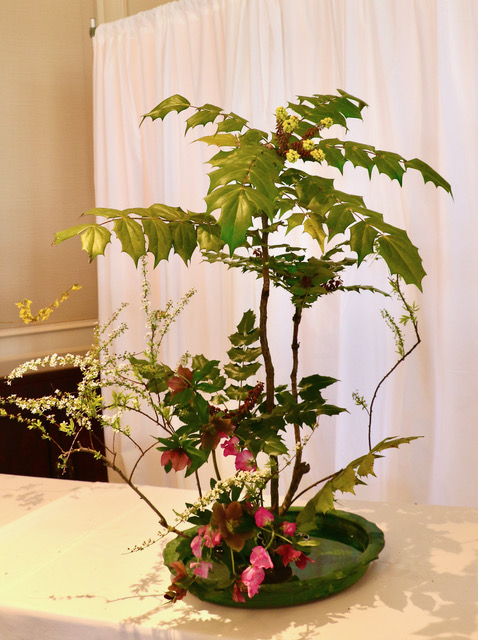
OHARA SCHOOL PHILOSOPHY AND BRIEF HISTORY
The Ohara School was founded in 1895 by Unshin Ohara. He introduced a new style called “Moribana,” using Western-style cut flowers and a shallow container, thereby giving the arranger greater creative freedom. The Moribana style gained popularity and is now widely practiced by nearly all schools. The Ohara School emphasizes seasonal qualities, natural growth patterns, and the beauty of natural environments.

SOGETSU SCHOOL PHILOSOPHY
Sogetsu Ikebana can be created anytime, anywhere, by anyone in any part of the world and with any kind of material. Plants are the products of mother nature, but the basic principle of Sogetsu is “ikebana reflects the person who arranged it.” As we all differ from one another with different personalities, each plant has its own expression. The two arrangements using flowers of the same name are to be made into two different compositions. Different expression in each material is fully made use of in Ikebana.

CHIKO SCHOOL PHILOSOPHY
Elegant beauty with a modern sense–this school creates beauty with a minimum number of materials. Fruits, vegetables, dolls or other objects are combined with floral materials and linked with sand sprinkled at the base to create harmony. Mrs. Kao Naruse founded this school in 1927 and originated the style known as morimono.

ICHIYO SCHOOL HISTORY AND PHILOSOPHY
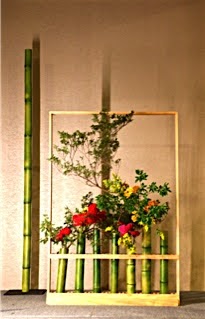
The Ichiyo School was founded on the idea of creating original ikebana suitable for modern lifestyles and all environments and spaces. Ichiyo style Ikebana encourages personal interpretation within the rules of construction. Combined with imagination, that is considered as essential to creative designs as are materials and containers. “If flower arranging is to be truly fulfilling, it should be a reflection of oneself.” Iemoto Naohiro Kasuya specializes in combining materials through a natural balance of their weights rather than by fastening the materials down with a kenzan or komii. Through balancing the materials, he aims to bring materials and containers together into a mutually cooperative position.


SANGETSU SCHOOL HISTORY AND PHILOSOPHY
Sangetsu is a school of flower arranging inspired by visionary and master artist Mokichi Okada, who promoted a spiritual approach to life through beauty. Okada’s style of arranging forms the basis of the School and serves as the model for Korinka — the advanced level and essence of Sangetsu. The five main guidelines which serve as the foundation of the Sangetsu School are: Arrange Flowers Naturally; Arrange Flowers Quickly; Arrange Flowers as if you were Painting a Picture; Arrange Flowers in Harmony; Arrange Flowers with Joy.
 Ikebana International Chapter No. 1 Washington, D.C.